
Mold Design and Construction


Where quality is born from the design
Every die-cast component is born from a carefully designed mold.
Mold design and construction is the starting point of our production process and represents one of the core competencies of Baggi Die Casting.
It is here that the precision, efficiency, and quality of the final result are defined.
Thanks to a specialized technical team and the use of latest-generation 3D CAD/CAM tools, we design molds intended to ensure durability, dimensional stability, and constant productivity over time.
Mold design and construction is the starting point of our production process and represents one of the core competencies of Baggi Die Casting.
It is here that the precision, efficiency, and quality of the final result are defined.
Thanks to a specialized technical team and the use of latest-generation 3D CAD/CAM tools, we design molds intended to ensure durability, dimensional stability, and constant productivity over time.
ANALYSIS
Technical analysis and project development
Every project begins with a careful analysis of the component to be manufactured.
The preliminary study allows us to define the most suitable die-casting cycle, identify parting lines, drafts, extraction and gating points.
Every detail is evaluated to optimize mold filling, reduce deformation, and ensure maximum production efficiency.
The design phase takes place in close collaboration with the customer, to translate their functional needs into real and productive technical solutions, respecting industrialization times and costs.
The preliminary study allows us to define the most suitable die-casting cycle, identify parting lines, drafts, extraction and gating points.
Every detail is evaluated to optimize mold filling, reduce deformation, and ensure maximum production efficiency.
The design phase takes place in close collaboration with the customer, to translate their functional needs into real and productive technical solutions, respecting industrialization times and costs.
PRECISION AND RELIABILITY
Mold manufacturing: precision and reliability

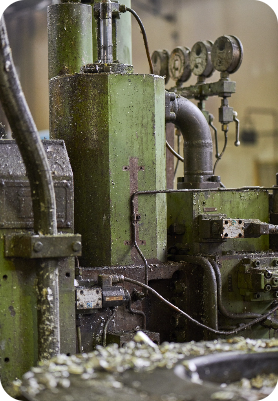
Mold construction is carried out internally in our tooling department or entrusted to certified and trusted partners with whom we collaborate steadily.
Each mold is made with high-quality steels and dedicated heat treatments, which ensure wear resistance, stability, and long operating life.
Mechanical machining, including milling, electro-erosion (EDM), and grinding, is performed with high-precision CNC machines, while every component of the mold—inserts, slides, ejection systems—is checked and assembled according to standardized internal procedures.
The result is a robust, efficient, and easy-to-maintain mold, ready to face continuous and large-series production.
Each mold is made with high-quality steels and dedicated heat treatments, which ensure wear resistance, stability, and long operating life.
Mechanical machining, including milling, electro-erosion (EDM), and grinding, is performed with high-precision CNC machines, while every component of the mold—inserts, slides, ejection systems—is checked and assembled according to standardized internal procedures.
The result is a robust, efficient, and easy-to-maintain mold, ready to face continuous and large-series production.
Validation
Testing, sampling and validation
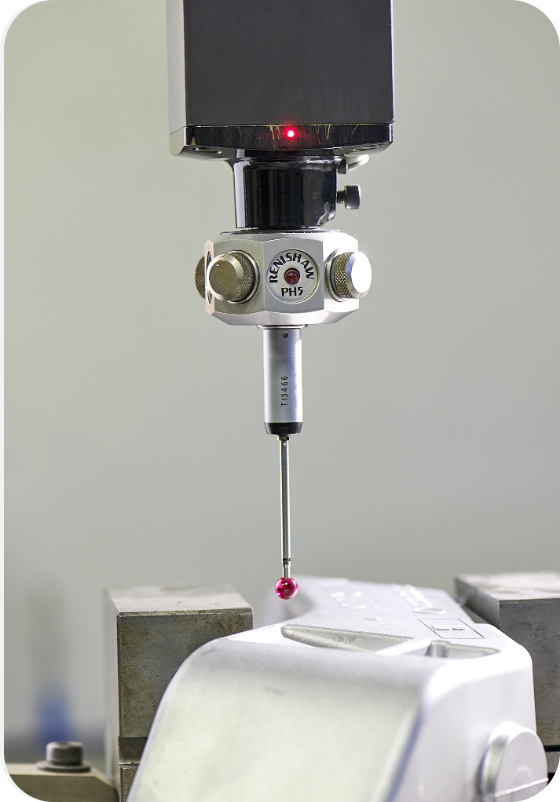
Before going into production, every mold undergoes sampling tests and functional testing. This phase allows us to verify the correct filling of the cavities, the quality of the part surface, and compliance with dimensional specifications.
When necessary, we make micro-corrections to the setup or balancing to optimize production yield and reduce cycle times.
The goal is to provide the customer with a perfectly calibrated and productive mold, ready to guarantee consistent results from the very first use.
When necessary, we make micro-corrections to the setup or balancing to optimize production yield and reduce cycle times.
The goal is to provide the customer with a perfectly calibrated and productive mold, ready to guarantee consistent results from the very first use.
Our experience
From design to results
At Baggi Die Casting, we believe that quality is not a final effect, but a direct consequence of the design. For this reason, every mold we create is designed to offer efficiency, precision, and durability, in line with the standards required by the most demanding sectors.
Contact us to receive consultation on mold design and construction or to develop your new die-casting project together.
Contact us to receive consultation on mold design and construction or to develop your new die-casting project together.